

24 Hr Holter
What is a Holter monitor?
A Holter monitor is a type of portable electrocardiogram (ECG). It records the electrical activity of the heart over 24 hours or longer while you are away from your healthcare provider’s office.
A standard or resting ECG is one of the simplest and fastest tests used to check the heart. Small, plastic patches (electrodes) are put on certain points on the chest and abdomen. The electrodes are connected to an ECG machine by wires. The electrical activity of the heart can be measured, recorded, and printed. No electricity is sent into the body.
Natural electrical impulses help control the different parts of the heart. This keeps blood flowing the way it should. An ECG records these impulses to show how fast the heart is beating. It also checks the rhythm of the heartbeats (steady or irregular). It records the strength and timing of the electrical impulses. Changes in an ECG can be a sign of many heart-related conditions.
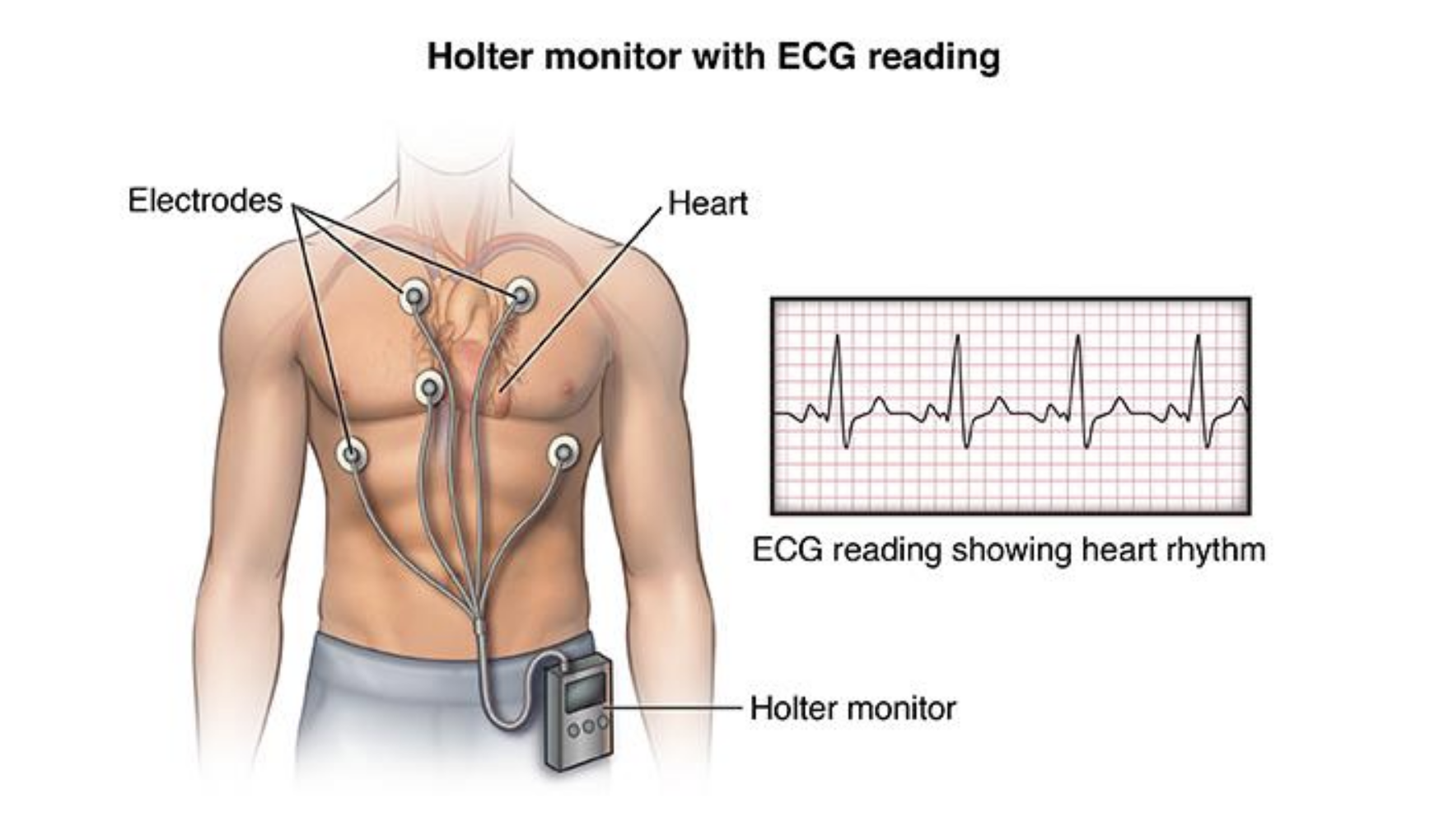
Your healthcare provider may request a Holter monitor ECG if you have symptoms such as dizziness, fainting, and low blood pressure. It may also be used if you have ongoing tiredness, palpitations, or a resting ECG doesn’t show a clear cause. Some Holter monitors now use patch-style devices without wires.
Certain abnormal heart rhythms may only occur intermittently or under specific conditions like stress or physical activity. A Holter monitor helps record these. Some devices have an event monitor feature that you activate when symptoms occur. Holter monitors record every heartbeat and provide data on minimum, maximum, and average heart rate.
You will receive instructions on how long to wear the monitor (usually 24–48 hours), how to keep a diary of your activities and symptoms, and how to take care of the device (such as keeping it dry).
Why might I need a Holter monitor?
- To evaluate symptoms that may be heart-rhythm related: chest pain, tiredness, shortness of breath, dizziness, or fainting.
- To identify irregular heartbeats or palpitations.
- To assess risk for future heart-related events in conditions such as hypertrophic cardiomyopathy or Wolff-Parkinson-White syndrome.
- To check pacemaker function.
- To evaluate effectiveness of treatments for abnormal heart rhythms.
- To observe heart rate variations and rhythm pauses throughout the day.
- There may be other reasons advised by your healthcare provider.
What are the risks of a Holter monitor?
Holter monitoring is safe with minimal risks. Issues may include difficulty keeping electrodes attached, discomfort from sticky patches or tape, and potential skin irritation or blistering if worn for long periods.
Other risk factors may depend on your health condition. Consult your doctor if you have concerns.
Factors that may affect readings:
- Being near magnets, metal detectors, high-voltage wires, and certain electronics (e.g., shavers, microwaves, phones).
- Excessive sweating, which may loosen or dislodge leads.
How do I get ready for a Holter monitor?
- Your provider will explain the procedure and answer questions.
- No fasting is required.
- You may receive specific personal instructions from your provider.
What happens during a Holter monitor?
- You will be asked to remove jewelry or objects that interfere with the recording.
- You’ll remove clothing from the waist up so electrodes or a patch can be attached to your chest. You will be provided privacy.
- The skin is cleaned and may be shaved for better contact.
- Electrodes will be placed on your chest and abdomen, connected to the monitor via wires. Newer devices may stick directly to the chest without wires.
- Check if you need to change the monitor batteries and how to do so.
- You can return to normal activities (work, chores, light exercise) unless instructed otherwise.
- Keep a diary of activities and symptoms. Note time, date, and nature of any symptoms like dizziness, palpitations, or chest pain.
What happens after a Holter monitor?
You can typically return to your normal diet and activities unless told otherwise. There’s no special aftercare.
Notify your provider of any ongoing symptoms, such as chest pain, shortness of breath, or fainting. They may provide additional instructions after reviewing your recording.
Next steps
Before agreeing to the test or procedure, ensure you know:
- The name of the test or procedure
- The reason you’re having it
- Expected results and their meaning
- The risks and benefits
- Possible side effects or complications
- When and where it will happen
- Who will perform it and their qualifications
- What happens if you don’t proceed
- Any alternative options
- When and how you’ll receive results
- Whom to contact if you have questions after the test
- The cost or insurance coverage details